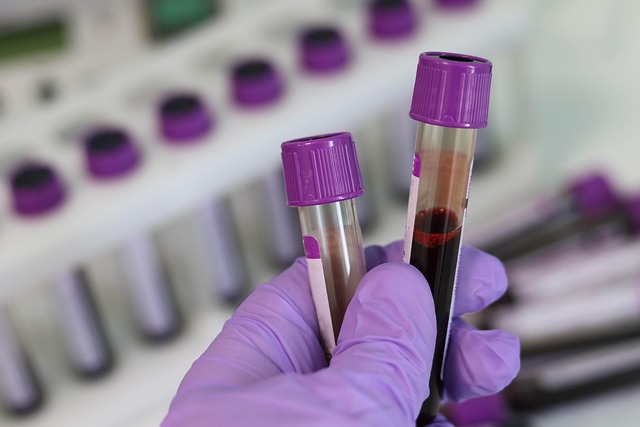


Navigating your hormone lab results can be a confusing experience. You receive a report filled with numbers, ranges, and technical terms. Often, the doctor’s office tells you everything is “normal,” yet you still feel far from well. This disconnect between what the lab report states and how you feel is at the heart of understanding the difference between “normal” and “optimal” when it comes to your hormone lab results explained. This article will clarify what these terms mean for your women hormone health, empowering you to engage more effectively in discussions about your hormonal balance for women.
Table of Contents
- Reading Your Female Hormone Profile Results
- How to Interpret Your Hormone Test Results
- Hormones: Are Your Hormones Normal? What Do your Lab…
- Understanding Your Female Hormone Profile Results
- Estrogen Levels Test
- Understanding Hormone Levels in Your Blood
- When to Talk to a Doctor
- FAQ
- Conclusion
Reading Your Female Hormone Profile Results
When you receive your female hormone profile results, you’ll typically see a list of hormones tested, such as estrogen (estradiol), progesterone, testosterone, DHEA, cortisol, and thyroid hormones (TSH, free T3, free T4). Alongside each hormone level, there will be a “reference range,” often labeled as “normal range.” This reference range is usually determined by collecting data from a large population of apparently healthy individuals, then calculating the statistical average and standard deviation.
For example, if 95% of healthy women in a particular age group have an estradiol level between 20 pg/mL and 200 pg/mL, that becomes the “normal” reference range. If your result falls anywhere within those boundaries, your lab report will flag it as “normal.”
However, this statistical normality doesn’t account for individual variations in symptoms, lifestyle, or genetic predispositions. A woman with an estradiol level of 25 pg/mL might be technically “normal” according to the lab, but if she’s experiencing severe hot flashes, mood swings, and bone density concerns, that level is far from optimal for her. Conversely, another woman with an estradiol level of 190 pg/mL might also be “normal” but could be experiencing breast tenderness and fluid retention, indicating that for her, this level might be pushing the upper limits of her personal optimal range.
The practical implication here is that a “normal” result doesn’t automatically equate to the absence of symptoms or the presence of robust health. It simply means your levels fall within the broad statistical bell curve of the population studied by that specific lab. Different labs may even have slightly different “normal” ranges, adding another layer of complexity.
How to Interpret Your Hormone Test Results
Interpreting your hormone test results effectively requires moving beyond a simple “in range/out of range” assessment. It involves contextualizing your numbers with your symptoms, your health history, and your life stage.
Consider progesterone, a crucial hormone for women hormone health. A typical “normal” range for progesterone in the luteal phase (after ovulation) might be 5-20 ng/mL. If your test shows 6 ng/mL, it’s “normal.” However, if you’re experiencing short luteal phases, recurrent miscarriages, or significant premenstrual syndrome (PMS) symptoms, a level of 6 ng/mL might be insufficient to support optimal health and symptom resolution. For you, an “optimal” level might be closer to 15-20 ng/mL.
Another example is testosterone. While often associated with men, testosterone plays a vital role in women’s energy, libido, muscle mass, and mood. The “normal” range for total testosterone in women is typically very wide, perhaps 8-60 ng/dL. A woman with a level of 10 ng/dL might be “normal” but could be struggling with low libido, fatigue, and difficulty building muscle. For her, an optimal level might be in the higher end of the normal range, perhaps 30-40 ng/dL, where she reports feeling her best.
The trade-off here is that chasing “optimal” without symptom correlation can lead to unnecessary interventions. The goal isn’t to hit arbitrary numbers, but to align your hormone levels with your personal experience of well-being. This perspective shifts the focus from treating a number to treating a person.
Hormones: Are Your Hormones Normal? What Do your Lab…
The question “Are your hormones normal?” is often met with a simple yes or no based on lab ranges. However, a more appropriate question for hormonal balance for women is, “Are your hormones balanced and supporting your optimal health?”
Many factors influence what “optimal” means for an individual. These include:
- Age and Menopausal Status: Hormone levels naturally fluctuate throughout a woman’s life. What’s optimal for a woman in her reproductive prime will differ significantly from what’s optimal for a post-menopausal woman.
- Symptoms: Your symptoms are the most critical piece of the puzzle. If you have “normal” thyroid levels but are experiencing extreme fatigue, hair loss, and weight gain, those “normal” levels may not be optimal for you.
- Individual Variability: Just as people have different shoe sizes, they have different optimal hormone levels. There’s no one-size-fits-all number.
- Timing of the Test: For hormones like estrogen and progesterone, the timing of the test within your menstrual cycle is crucial. A “normal” progesterone level in the follicular phase would be critically low in the luteal phase.
- Method of Testing: Different testing methods (blood, saliva, urine) can yield slightly different results and reference ranges.
Consider the example of thyroid-stimulating hormone (TSH). The “normal” range often goes up to 4.5 or 5.0 mIU/L. However, many functional medicine practitioners and endocrinologists consider a TSH above 2.5 or 3.0 mIU/L to be suboptimal, especially if the patient is symptomatic. A woman with a TSH of 4.0 mIU/L might be told she’s “normal” but could be experiencing classic hypothyroid symptoms. Adjusting her thyroid medication to bring her TSH closer to 1.0-2.0 mIU/L might resolve her fatigue, brain fog, and cold intolerance.
This highlights the critical role of symptom navigation in evaluating lab results. Your subjective experience is as important as the objective numbers on the report.
Understanding Your Female Hormone Profile Results
To truly understand your female hormone profile results, you need to look at the bigger picture. Hormones don’t act in isolation; they interact in a complex symphony. An imbalance in one hormone can cascade and affect others.
Let’s look at the interplay between estrogen and progesterone. In a healthy cycle, these two hormones are in a specific ratio. If estrogen is high relative to progesterone (a state often called “estrogen dominance,” even if absolute estrogen levels are “normal”), symptoms like heavy periods, fibroids, endometriosis, and irritability can arise. Your individual lab results might show both estrogen and progesterone within their respective “normal” ranges, but their ratio could be suboptimal.
For instance, if a lab report shows:
- Estradiol (E2): 150 pg/mL (normal range: 20-200 pg/mL)
- Progesterone: 8 ng/mL (normal range: 5-20 ng/mL)
Both are “normal.” However, for optimal hormonal balance for women in the luteal phase, many practitioners look for a progesterone-to-estrogen ratio of 100:1 to 500:1. In this example, 8 ng/mL progesterone is roughly 800 pg/mL (converting ng/mL to pg/mL for comparison, assuming 1 ng = 1000 pg). So, the ratio is 800/150 = ~5.3:1. This ratio is far below the optimal range, suggesting a functional estrogen dominance despite “normal” individual levels. This is a scenario where hormone lab results explained by a holistic lens are crucial.
This perspective helps explain why some women feel unwell despite “normal” labs. It’s not just about the absolute numbers, but their relationships and how they contribute to overall women hormone health.
Estrogen Levels Test
An estrogen levels test, specifically for estradiol (E2), is a common component of female hormone panels. Estradiol is the most potent form of estrogen and plays a key role in reproductive health, bone density, and cognitive function.
When interpreting estradiol results, consider the following:
- Cycle Day: Estradiol levels fluctuate dramatically throughout the menstrual cycle. They are typically low during menstruation, rise significantly towards ovulation, peak just before ovulation, and then drop slightly before rising again in the mid-luteal phase if pregnancy occurs, or decline if not. A single estradiol measurement without knowing the cycle day is often meaningless.
- Symptoms of High Estrogen: Even within the “normal” range, higher-end estradiol levels can contribute to symptoms like breast tenderness, fibrocystic breasts, heavy periods, mood swings, weight gain (especially around hips and thighs), and increased risk of certain conditions.
- Symptoms of Low Estrogen: Lower-end “normal” estradiol can lead to hot flashes, night sweats, vaginal dryness, decreased libido, mood changes, bone loss, and difficulty concentrating.
Let’s illustrate with a scenario: A 45-year-old woman in perimenopause gets an estradiol test on day 21 of her cycle, and the result is 80 pg/mL. The lab’s “normal” range for the luteal phase might be 50-250 pg/mL. So, her result is “normal.” However, she’s experiencing severe hot flashes, sleepless nights, and significant vaginal dryness. For her, an “optimal” estradiol level might be closer to 120-150 pg/mL to alleviate her symptoms. Her “normal” level isn’t serving her well.
Conversely, a woman with an estradiol level of 220 pg/mL (still “normal” for some labs) might be suffering from crippling migraines and severe breast tenderness. For her, this level, while technically normal, is likely contributing to her discomfort, and a lower, yet still healthy, level might be optimal. This is a prime example of how symptom navigation drives the interpretation of hormone lab results explained.
Understanding Hormone Levels in Your Blood
Understanding hormone levels in your blood extends beyond just estrogen to include other vital players like cortisol, DHEA, and thyroid hormones. These are all interconnected and contribute to your overall hormonal balance for women.
Cortisol: Often called the “stress hormone,” cortisol levels are typically measured in the morning. A “normal” morning cortisol range might be 10-20 mcg/dL. If your result is 9 mcg/dL, it’s technically “normal” but on the lower end. If you’re experiencing chronic fatigue, brain fog, and difficulty coping with stress, this “normal” low cortisol might indicate adrenal fatigue or dysfunction, requiring support to bring it to a more optimal level (e.g., mid-range, 14-16 mcg/dL).
DHEA-S (Dehydroepiandrosterone Sulfate): DHEA is a precursor hormone to both estrogens and androgens. Its levels typically decline with age. A “normal” range for DHEA-S in a 40-year-old woman might be 70-300 mcg/dL. If her level is 80 mcg/dL and she reports low energy, decreased libido, and poor stress resilience, this “normal” low DHEA-S might be suboptimal for her well-being. An optimal level might be closer to the mid-range for her age group.
Thyroid Hormones (TSH, Free T3, Free T4): As mentioned earlier, TSH is a pituitary hormone that stimulates the thyroid. Free T3 and Free T4 are the active thyroid hormones. A “normal” TSH might be up to 4.5 mIU/L. However, if a patient has a TSH of 3.8 mIU/L, and her Free T3 and Free T4 are in the lower half of their respective “normal” ranges, and she has symptoms like fatigue, weight gain, constipation, and hair loss, her thyroid function is likely suboptimal. Many practitioners aim for a TSH between 0.5-2.5 mIU/L, with Free T3 and Free T4 in the upper half of their ranges, for optimal women hormone health.
Here’s a comparison table to illustrate the “normal” vs. “optimal” approach:
| Hormone | Typical “Normal” Range (Example) | “Normal” Result | Potential Symptom | “Optimal” Interpretation & Action (Example) |
|---|---|---|---|---|
| Estradiol | Luteal Phase: 50-250 pg/mL | 60 pg/mL | Hot flashes, vaginal dryness, low libido | This “normal” is low for symptom resolution. Aim for 120-150 pg/mL. |
| Progesterone | Luteal Phase: 5-20 ng/mL | 6 ng/mL | PMS, short luteal phase, heavy periods | This “normal” is often insufficient. Aim for 15-20 ng/mL. |
| TSH | 0.4-4.5 mIU/L | 3.8 mIU/L | Fatigue, weight gain, brain fog, hair loss | This “normal” is often suboptimal. Aim for 0.5-2.5 mIU/L. |
| Total Testosterone | 8-60 ng/dL | 12 ng/dL | Low libido, low energy, difficulty building muscle | This “normal” is low for vitality. Aim for 30-40 ng/dL. |
| Cortisol (AM) | 10-20 mcg/dL | 9 mcg/dL | Chronic fatigue, poor stress response, brain fog | This “normal” is low; consider adrenal support. Aim for 14-16 mcg/dL. |
This table clearly demonstrates that a number within the “normal” range does not automatically mean everything is functioning optimally for you. When you encounter such discrepancies, it’s when to talk to a doctor who understands this nuanced approach.
When to Talk to a Doctor
Recognizing the difference between “normal” and “optimal” is the first step. The next is knowing when to talk to a doctor about your concerns. If your lab results are “normal” but you continue to experience symptoms that significantly impact your quality of life, it’s time for a deeper conversation.
Here are scenarios where proactive discussion with your doctor is warranted:
- Persistent Symptoms: You have symptoms like chronic fatigue, unexplained weight changes, mood disturbances, sleep issues, hair loss, low libido, or severe PMS/perimenopausal symptoms, despite “normal” lab results.
- Desire for Proactive Health: You want to optimize your health and prevent future issues, not just treat disease once it’s established.
- Considering Hormone Therapy: You’re exploring options like hormone replacement therapy (HRT) or bioidentical hormone therapy (BHRT), which require careful monitoring and an understanding of optimal ranges.
- Family History: You have a family history of hormonal imbalances, autoimmune conditions, or endocrine disorders.
- Seeking a Second Opinion: Your current doctor dismisses your symptoms because your labs are “normal.”
When you talk to a doctor, come prepared. Bring a detailed list of your symptoms, their severity, and how they impact your daily life. Keep a symptom journal. Clearly articulate that while your labs are “normal,” you suspect they are not “optimal” for you and your well-being. Ask specific questions about where your results fall within the reference range, and inquire about the possibility of adjusting levels to alleviate your symptoms, even if they are technically “normal.” This proactive approach is key to achieving hormonal balance for women.
FAQ
How to interpret hormonal profile results?
Interpreting hormonal profile results involves more than just checking if numbers fall within the “normal” reference range. It requires contextualizing those numbers with your individual symptoms, age, menstrual cycle phase (if applicable), health history, and overall well-being. Look for patterns, ratios between hormones (e.g., estrogen to progesterone), and where your levels sit within the normal range (e.g., lower end, upper end). Optimal ranges often differ from broad normal ranges, aiming for the levels at which you feel your best, rather than just disease-free.
Can MTHFR cause hormonal imbalance?
Yes, MTHFR (methylenetetrahydrofolate reductase) gene mutations can indirectly contribute to hormonal imbalances. The MTHFR enzyme is crucial for methylation, a biochemical process involved in many bodily functions, including hormone detoxification and neurotransmitter production. Impaired methylation due to an MTHFR mutation can affect how the body processes and eliminates excess estrogens, potentially leading to estrogen dominance. It can also impact the production of neurotransmitters that influence mood and hormone regulation. While not a direct cause, it’s a significant contributing factor to consider in cases of persistent hormonal issues.
What are the 5 signs of hormonal imbalance?
While symptoms can vary widely depending on which hormones are imbalanced, common signs that might indicate a hormonal imbalance include:
- Persistent Fatigue: Feeling constantly tired, even after adequate sleep.
- Unexplained Weight Changes: Difficulty losing or gaining weight despite consistent diet and exercise, or unexplained weight gain/loss.
- Mood Swings, Irritability, or Anxiety/Depression: Significant shifts in mood, increased anxiety, or feelings of depression that seem disproportionate.
- Sleep Disturbances: Difficulty falling asleep, staying asleep, or restless sleep.
- Changes in Menstrual Cycle or Libido: Irregular periods, heavy or painful periods, or a noticeable decrease in sex drive.
Other signs can include hair loss, skin issues (acne, dryness), digestive problems, and brain fog.
Conclusion
The journey to understanding your hormone lab results explained is a nuanced one. The distinction between “normal” and “optimal” is not merely semantic; it’s fundamental to achieving true hormonal balance for women and alleviating persistent symptoms. “Normal” is a statistical average, while “optimal” is a state of personal well-being, where your hormone levels support your body’s best function and your highest quality of life. For health-conscious women seeking evidence-based information, recognizing this difference is empowering. If your lab results are “normal” but your body tells a different story through persistent symptoms, it’s when to talk to a doctor who understands this holistic approach to women hormone health. Your symptoms are valid indicators, and advocating for an optimal, rather than just normal, hormonal balance is key to feeling your best.